The projects are presented in chronological order, from the earliest to the most recent.
The Wee Spanish Mobile Library- La Biciteca (Familias en Glasgow, 2016-2018)
The community work done with the Biciteca prompted an Early Day Motion in Parliament
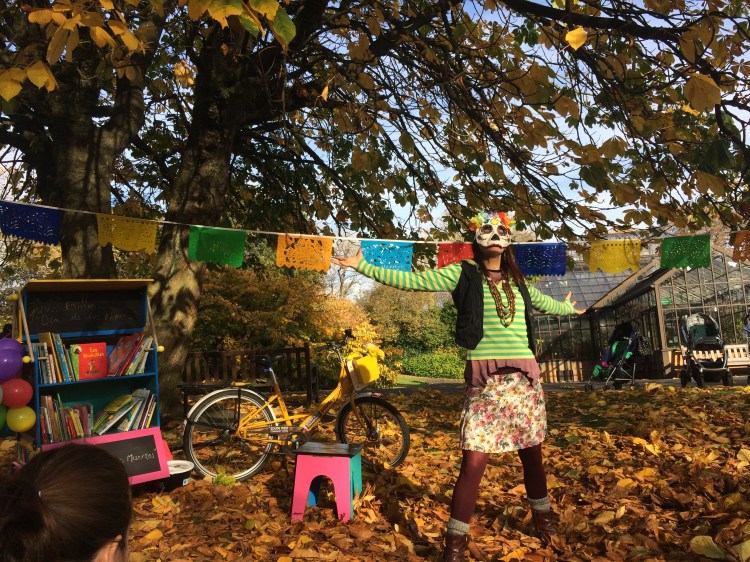
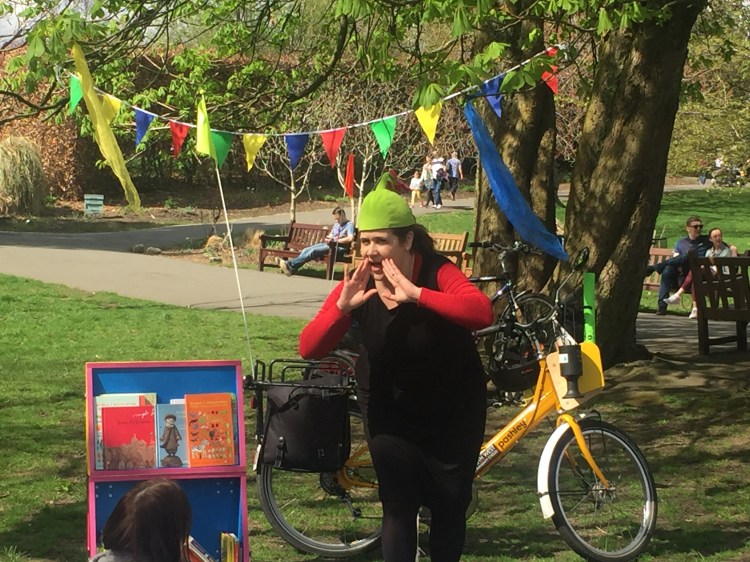
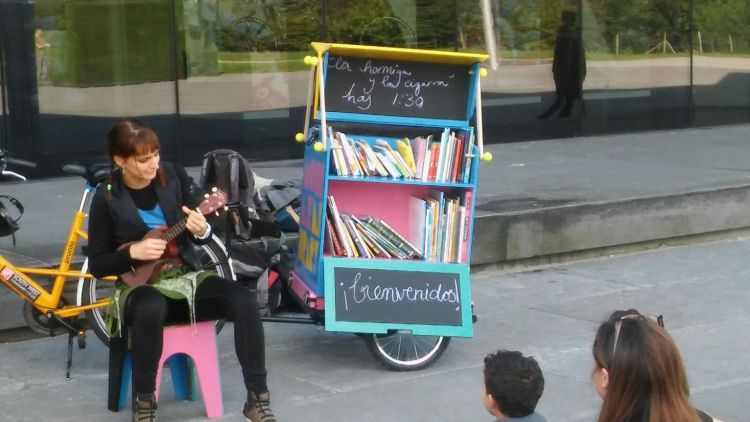
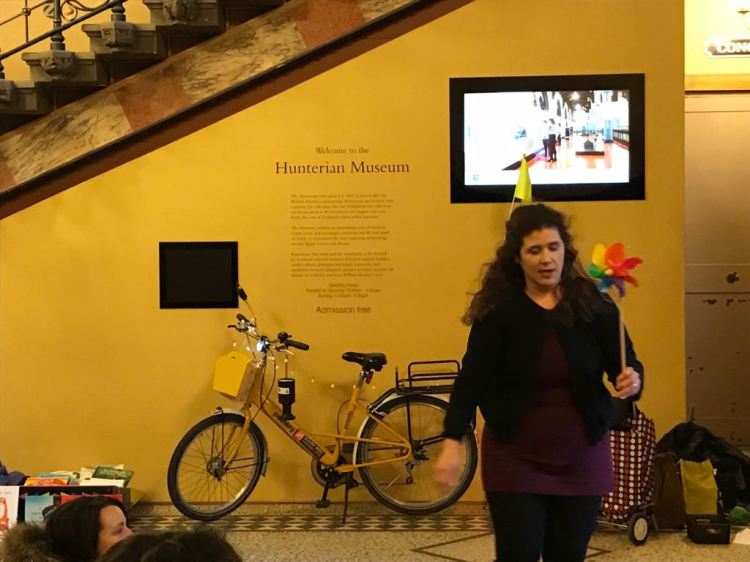
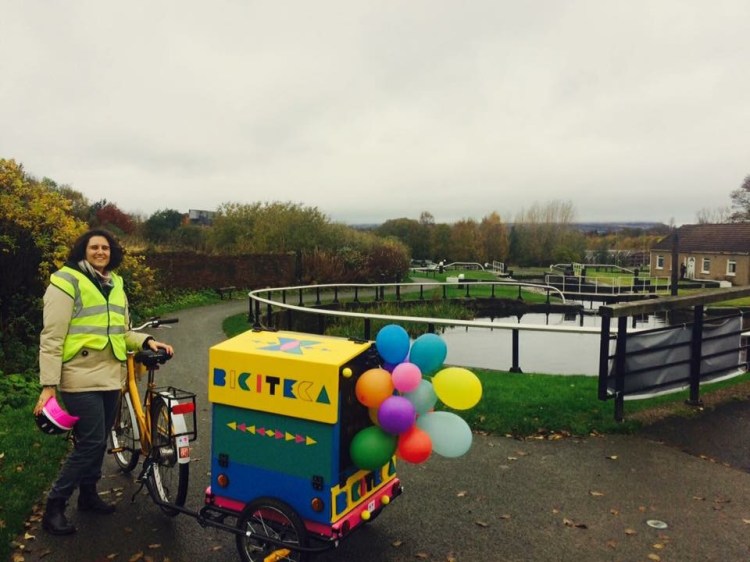
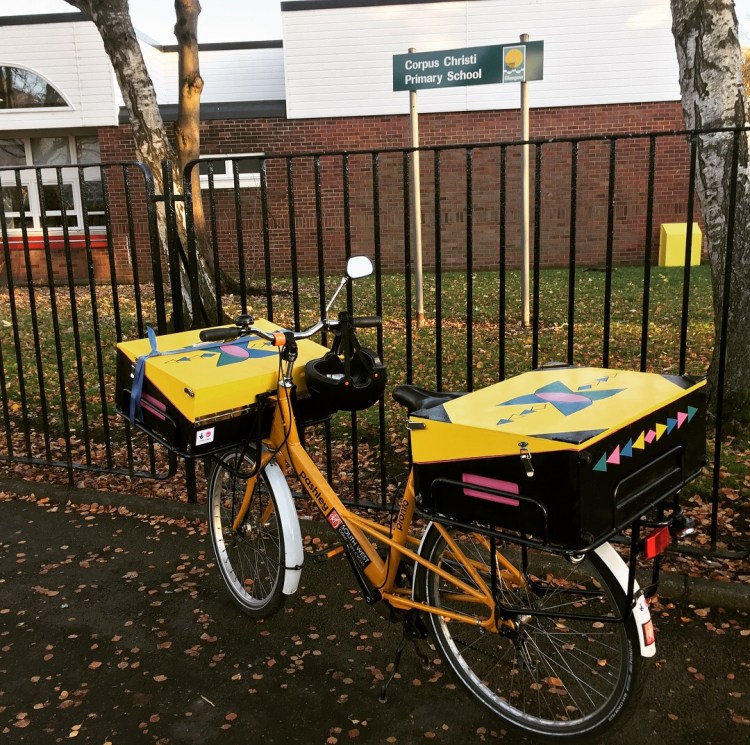
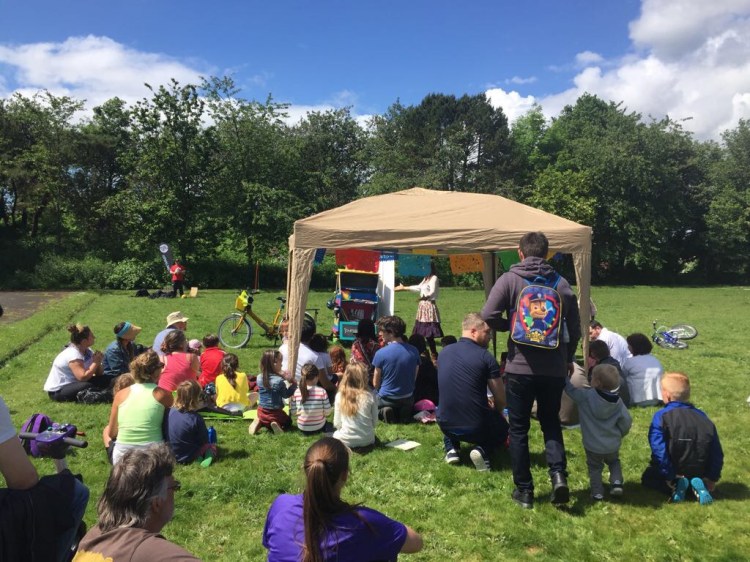
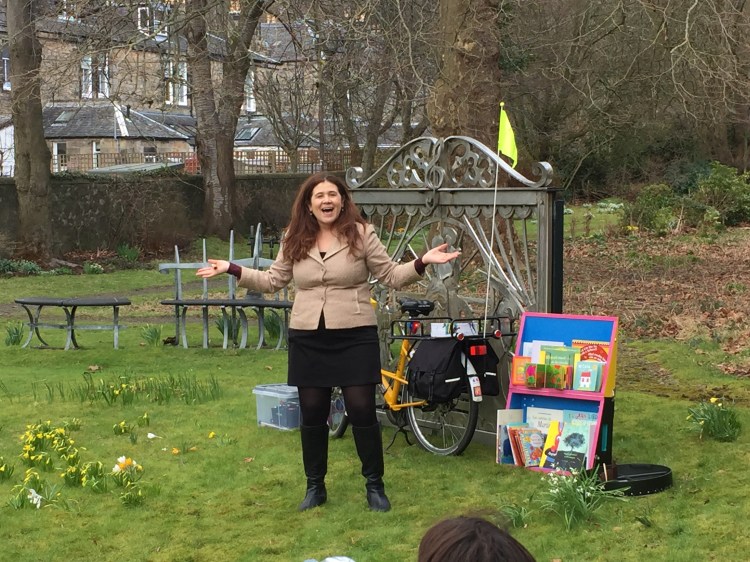
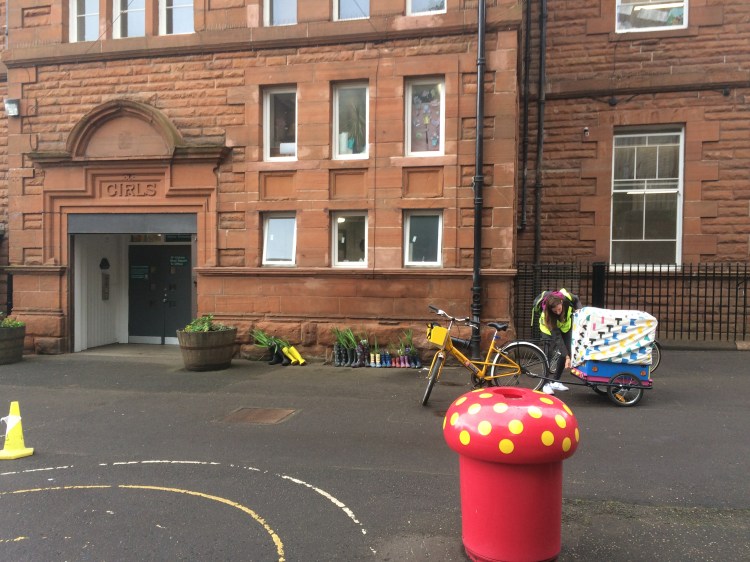
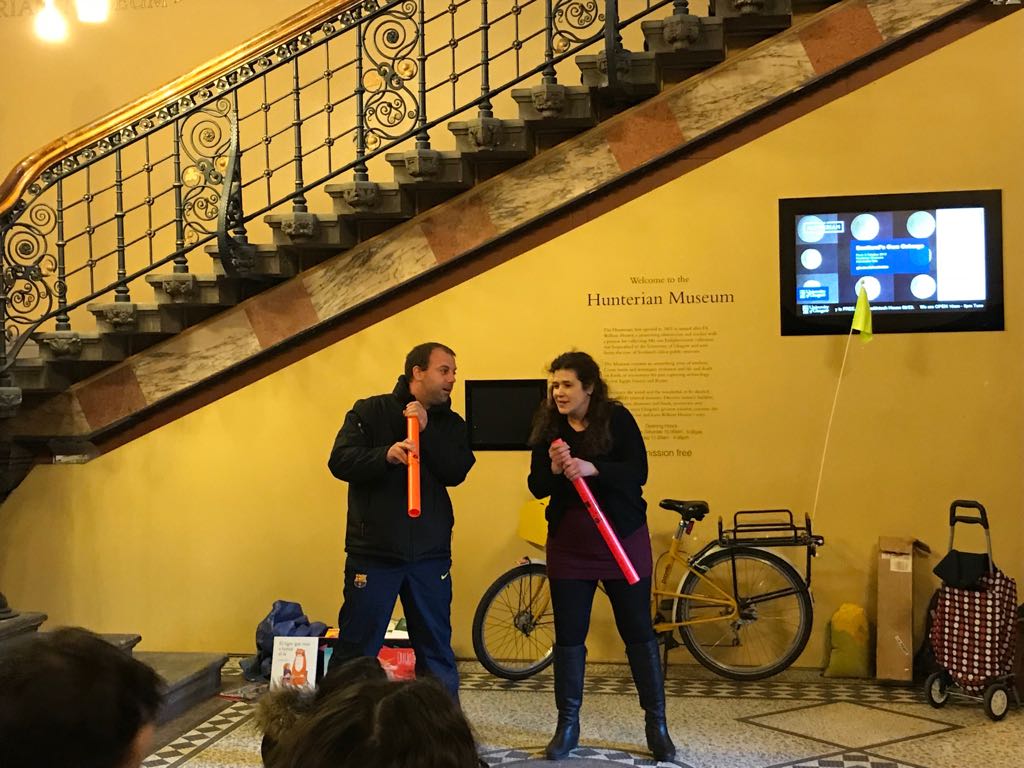
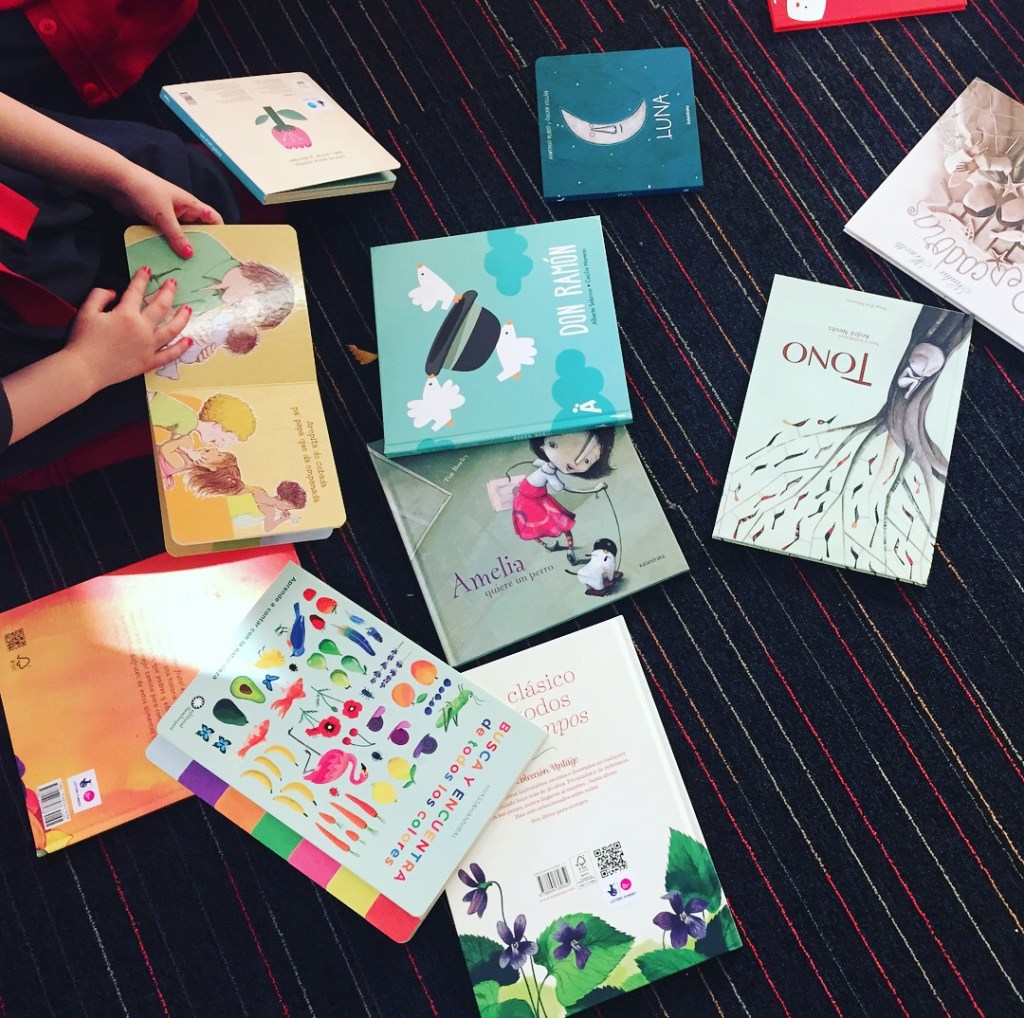
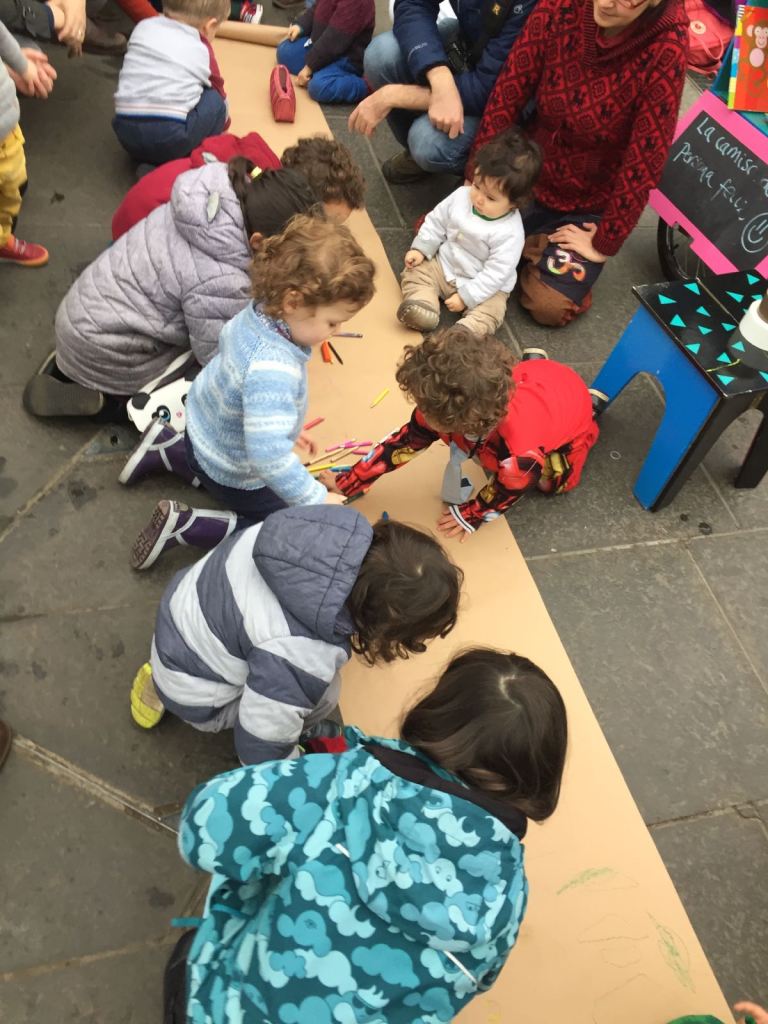
While working as a Trustee for Familias en Glasgow (FEG), a small charity that supports Spanish-speaking migrant families in the city (from Spain and Latin America), I co-developed and coordinated The Wee Spanish Mobile Library- La Biciteca a unique community art project in the UK, being awarded several funding grants, including two Big Lottery grants. The book bike held an exclusive collection of children’s books in Spanish and offers free storytelling sessions in local parks, museums and festivals in Glasgow, Edinburgh and Stirling. A successful partnership with Glasgow City Council made it possible to deliver funded storytelling sessions at early years centres and primary schools in Glasgow and helped the charity to become financially more sustainable.
The initiative aimed to encourage children from all backgrounds, to live in and understand a globalised world where communication across languages and cultures will be an essential skill to cherish but also to protect. The activities were designed to enhance children’s linguistic skills and general well-being in a fun and didactic way, and offer a space to imagine, explore and interact in the community language (Spanish) or in a new language.
The original idea was inspired by similar initiatives in the Hispanic world that aim to put free books in the hands of people by bringing those resources to them in economic and eco-friendly mobile libraries, such as the “Bibliocletas” in Mexico or the Biblioburro in Colombia.
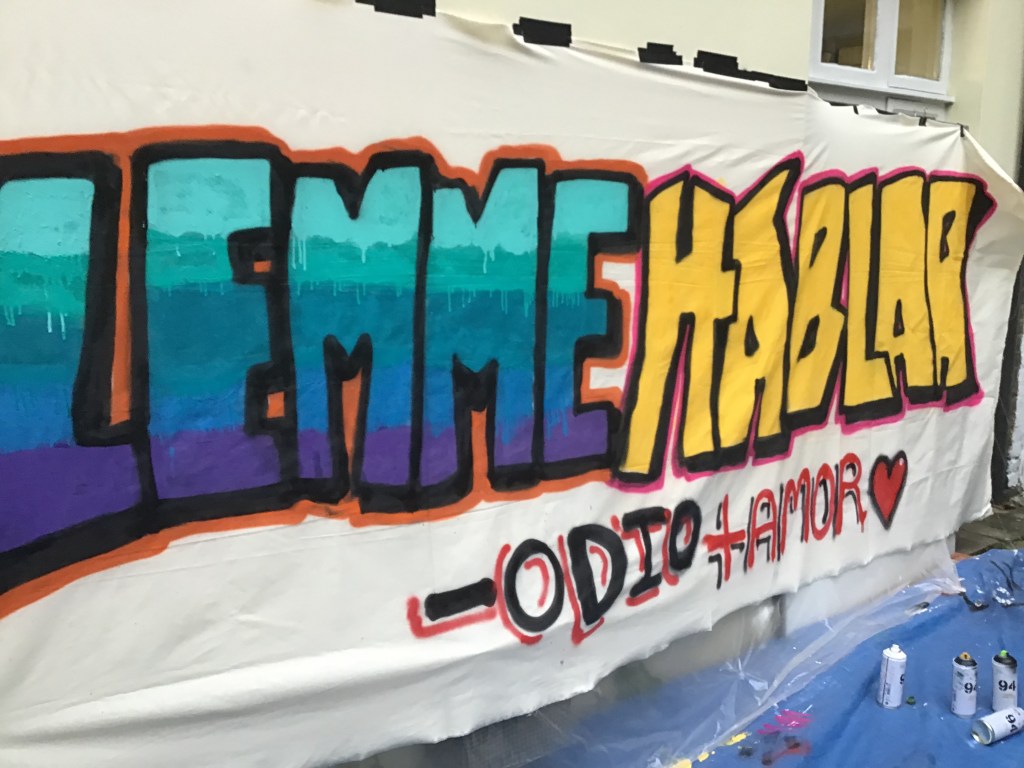
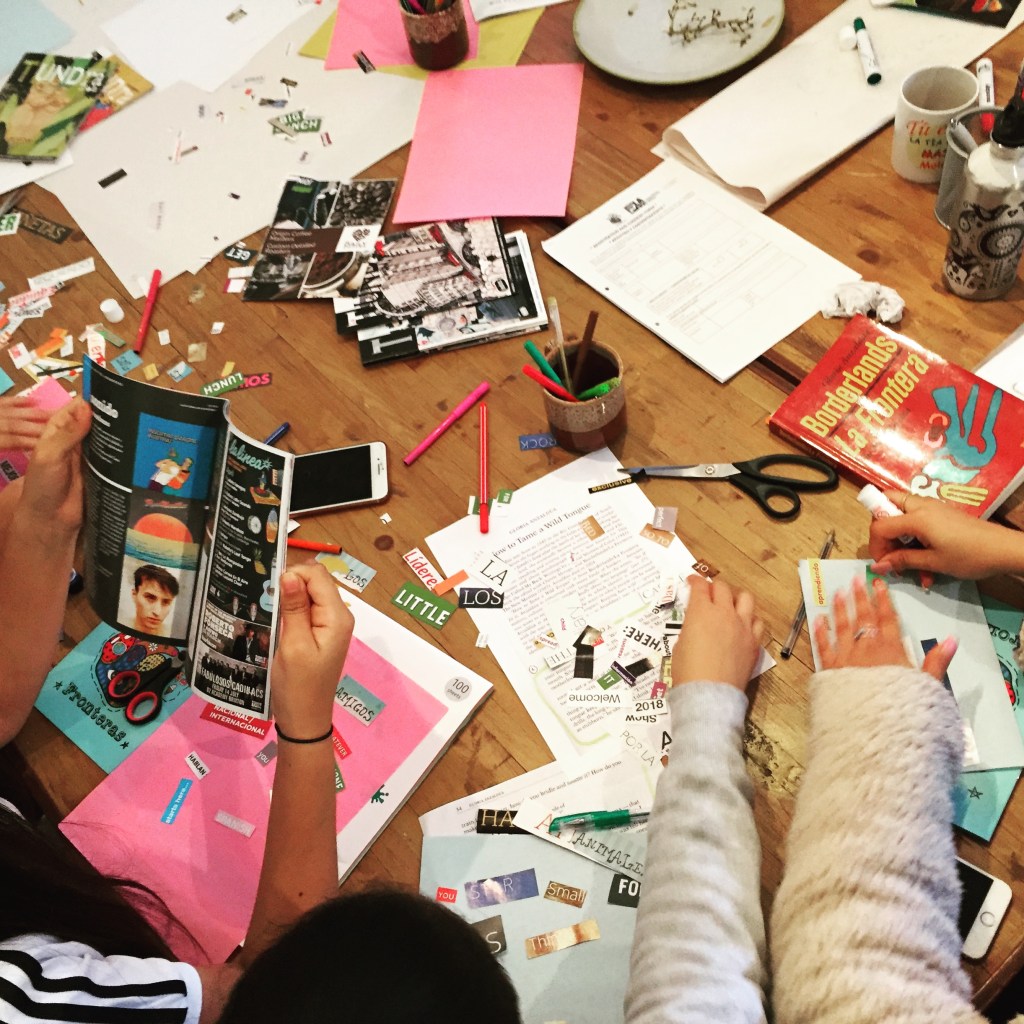
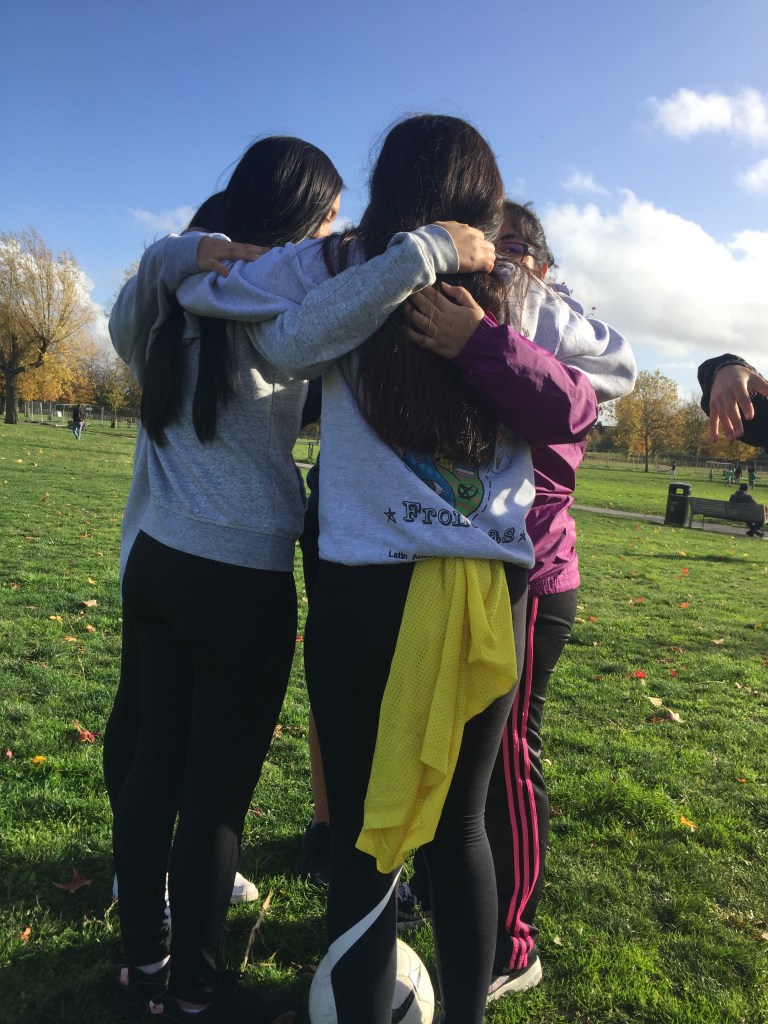
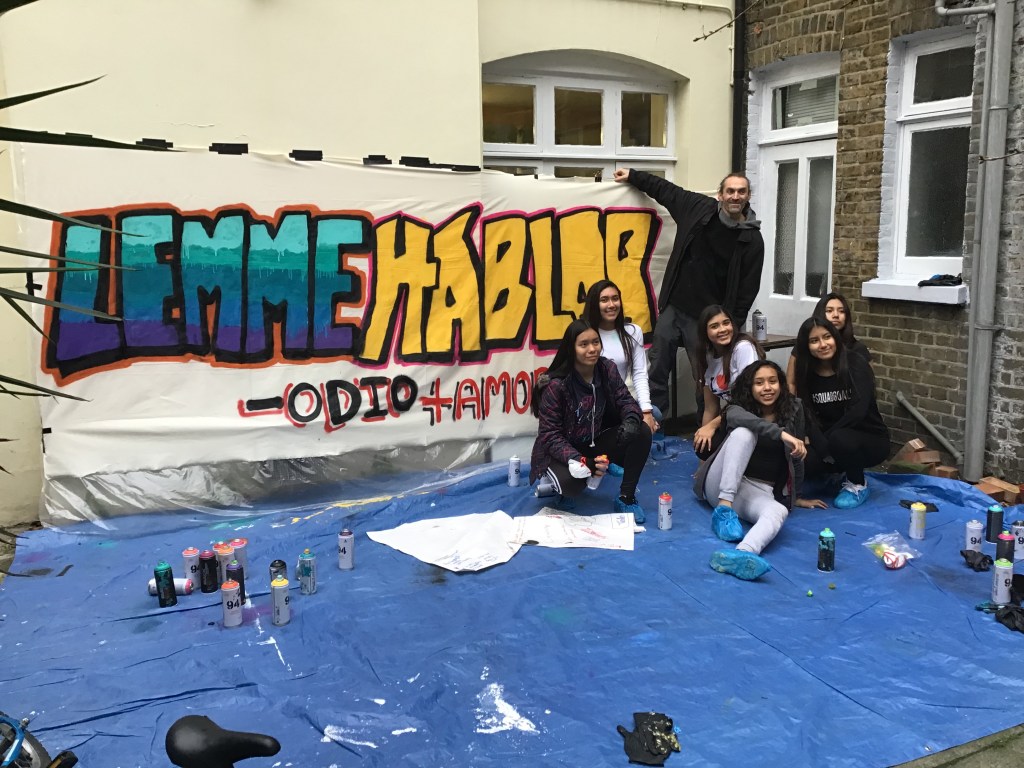
Sin Fronteras Leadership Project
Sin Fronteras Leadership programme was a unique collaborative project between the Open World Research Initiative and the Institute of Modern Languages Research, University of London, and the Latin American Women’s Rights Service in partnership with Southwark Council. The multidisciplinary project included a series of creative workshops aimed to explore community formation, the significance of language and its relation and relevance to community formation, leadership and civic participation.
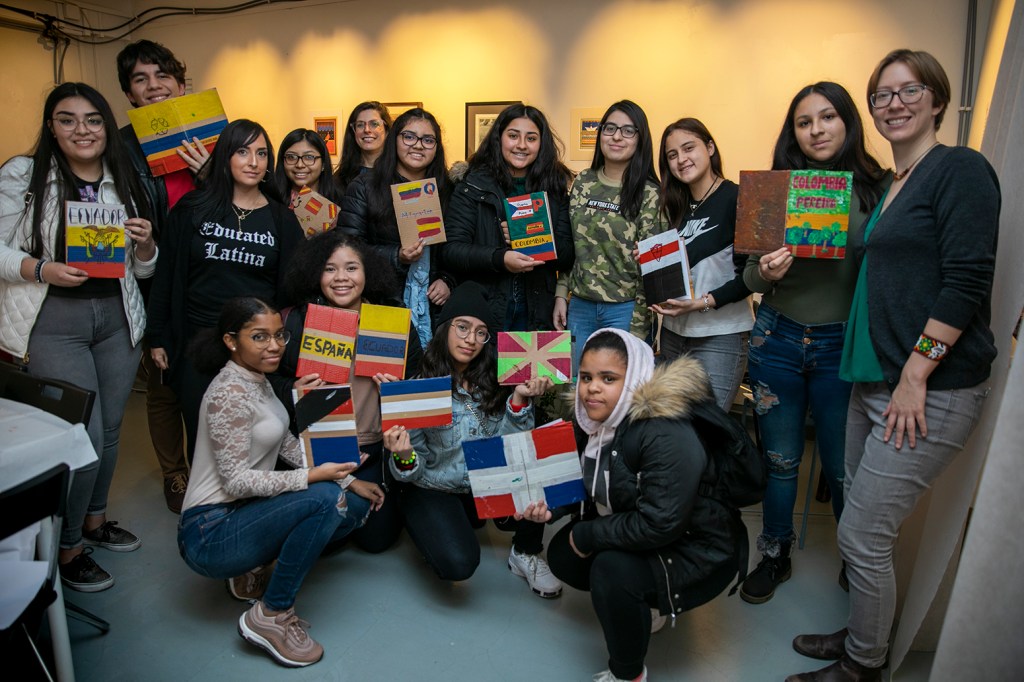
For over a six week-programme, the different art workshops aimed to explore the way young Latin American women and girls perceive their own cultural, linguistic and gender identity in a creative, critical and engaging way.
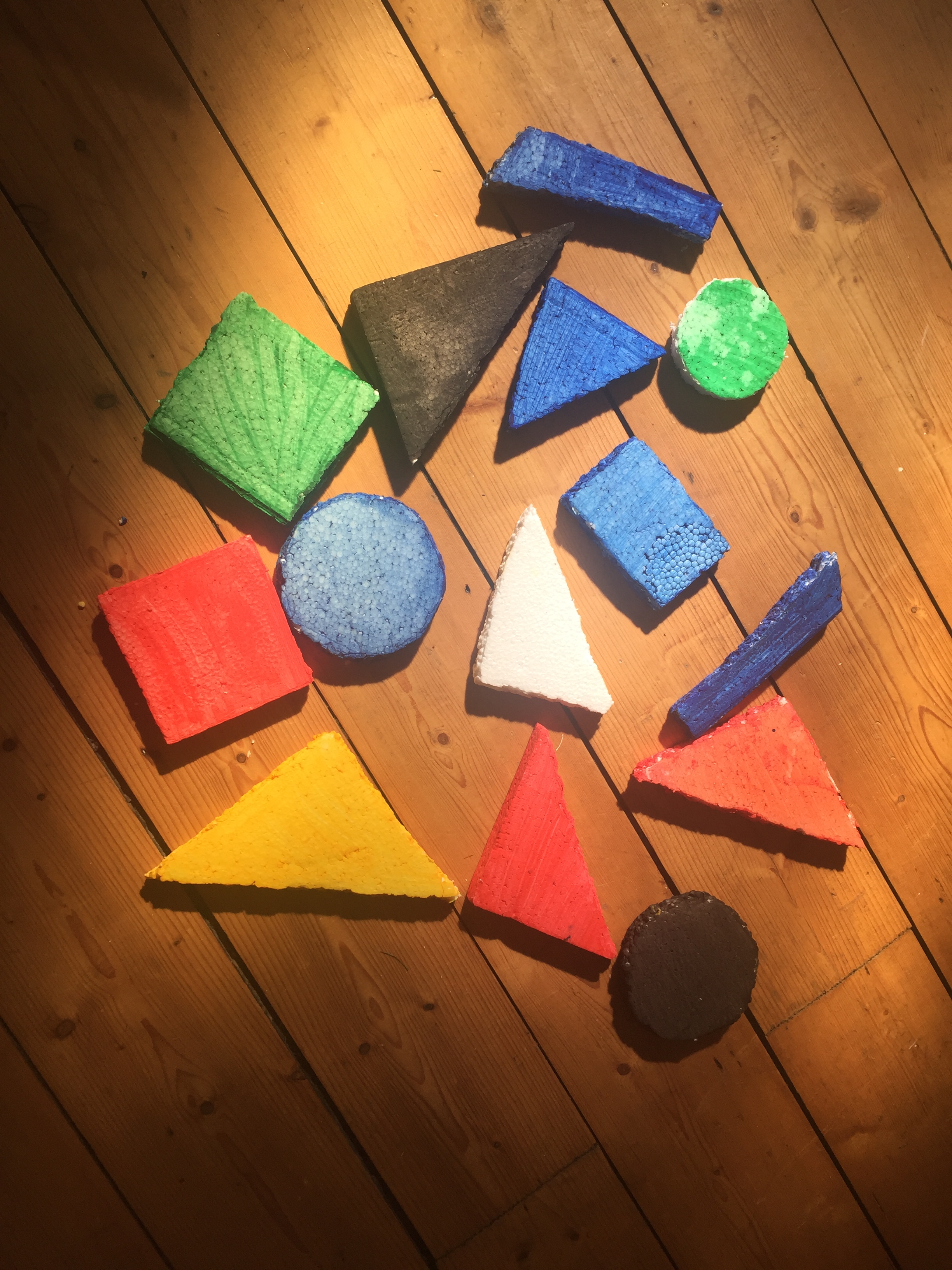
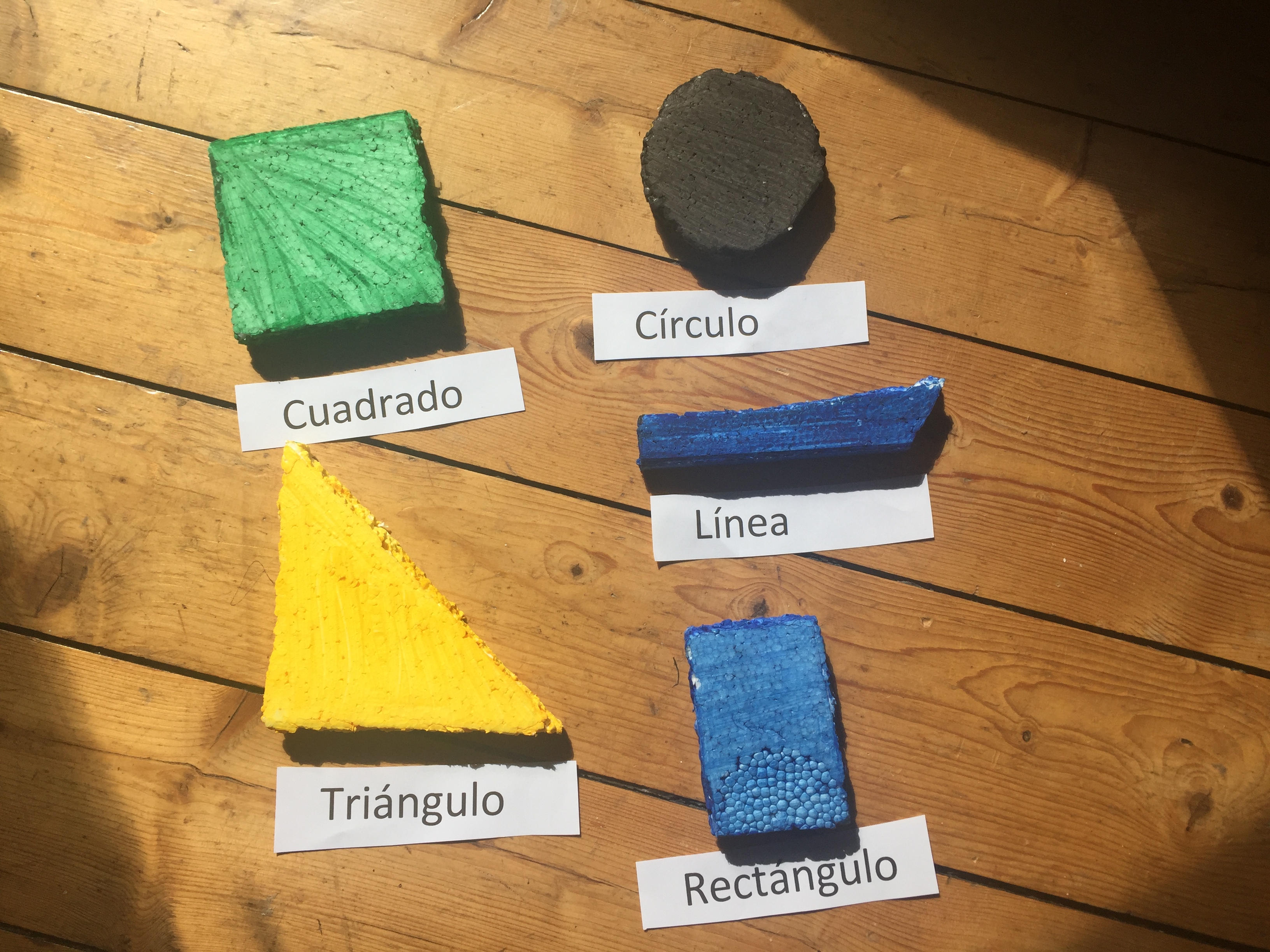
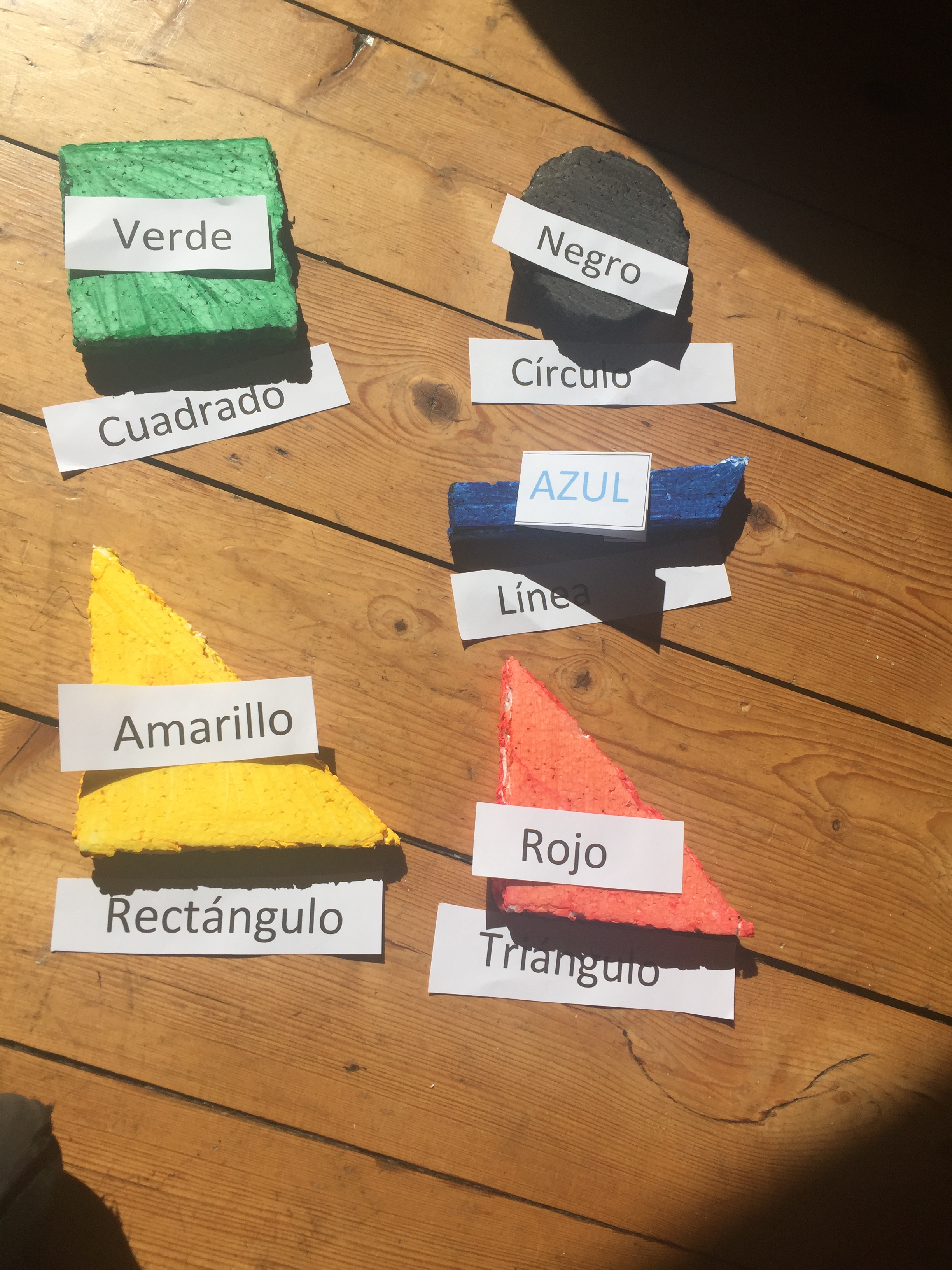
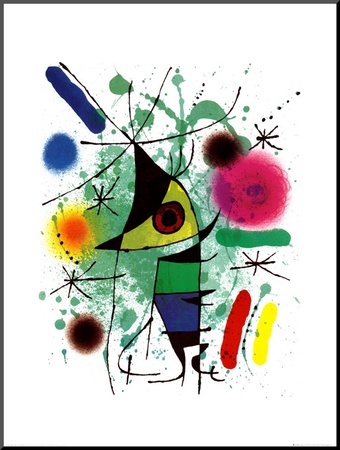
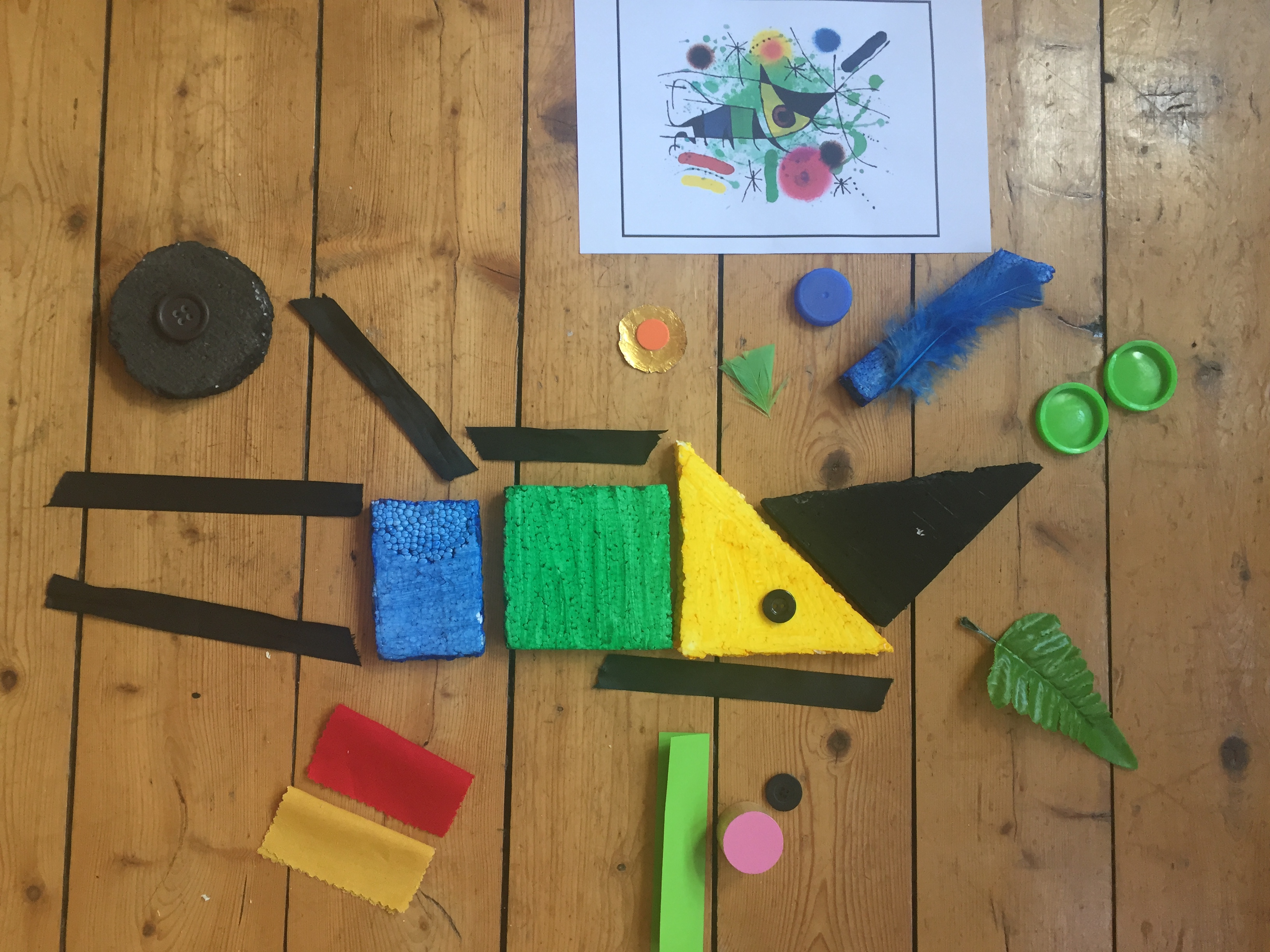
This example tries to show how tutors could recycle everyday materials to create simple multi-sensory teaching materials.
Art, Language, Creativity and Dementia
Several studies have shown the importance of creative activities as an effective way to reach out and reconnect with people with different capabilities and at different stages of their life. From music, dance movement therapy to art workshops, there have been several initiatives in the UK working successfully with people with dementia. For instance, Dementia and Imagination is a research project in the UK that looks at the benefits that art activities can bring to people with dementia, but instead of using art as a therapeutic tool, delivered by an art therapist, it proposes to work on participatory and socially engaged art as a way to connect communities in a creative way. As part of the Lingo Flamingo tutor training programme in partnership between the Open University and the social enterprise Lingo Flamingo, I contributed to the development of tutorials and teaching materials examining the relevance, benefits and obstacles that creative practices and multi-sensory approaches can bring to language learning in a care setting.
Cartonera Creative Engagement Project
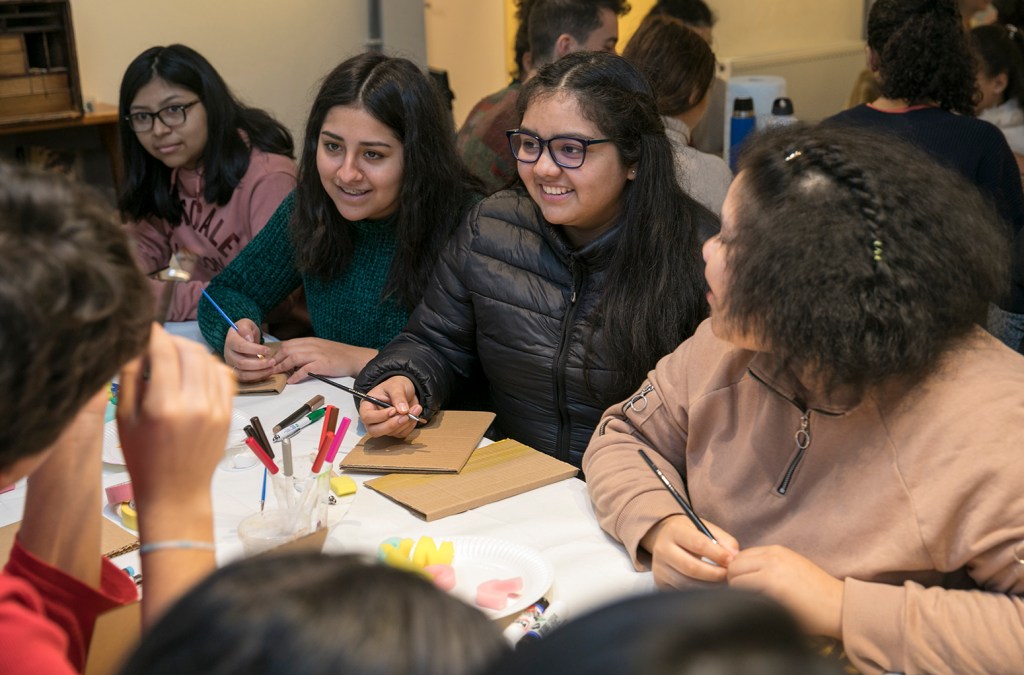
The Cartonera Workshops was a collaborative effort between two different AHRC projects in England – namely the OWRI’s Cross Language Dynamics: Reshaping Community from the Institute of Modern Languages Research, University of London and Cartonera Publishing: Relations, meaning and community in movement, the British Library, and the third-sector organisation, the Indoamerican Refugee and Migrant Organisation (IRMO), Southwark Council and the Migration Museum. The Cartoneras workshop aimed to explore notions of community, identity, and language through a series of workshops, from creative writing to book making. The idea was to imprint the voices of young Latin Americans in London at the time the UK was going to exit the EU.
The project included three different outreach public events:
a. Cartoneras Book Making Workshop at the British Library
b. Cartoneras Final Exhibition at PemPeople, Peckham.
c. Cartoneras in London: Untold Stories from Latin America as part of the Being Human Festival in partnership with the Migration Museum, IRMO, University of Surrey and Southwark Council.“Now we are in London, things have changed a lot. Now we are going to learn another language, which is English, and I hope that, as time goes by, everything will work out as we expect. And if everything is OK, I will be happy”. An extract from a Cartonera art book written by a 13-year old participant from Ecuador (my translation).
The Cartoneras project has been deemed by IRMO Senior Programme Manager as the organisation’s identity card:
“The new contacts made during the project have been fruitful. […] Cartoneras facilitated the involvement of the young people in the planning and consultation to develop new projects, contributing to make them feel more invested in the programme and giving them more opportunities to work with new partners and to explore new spaces and ways of work”.
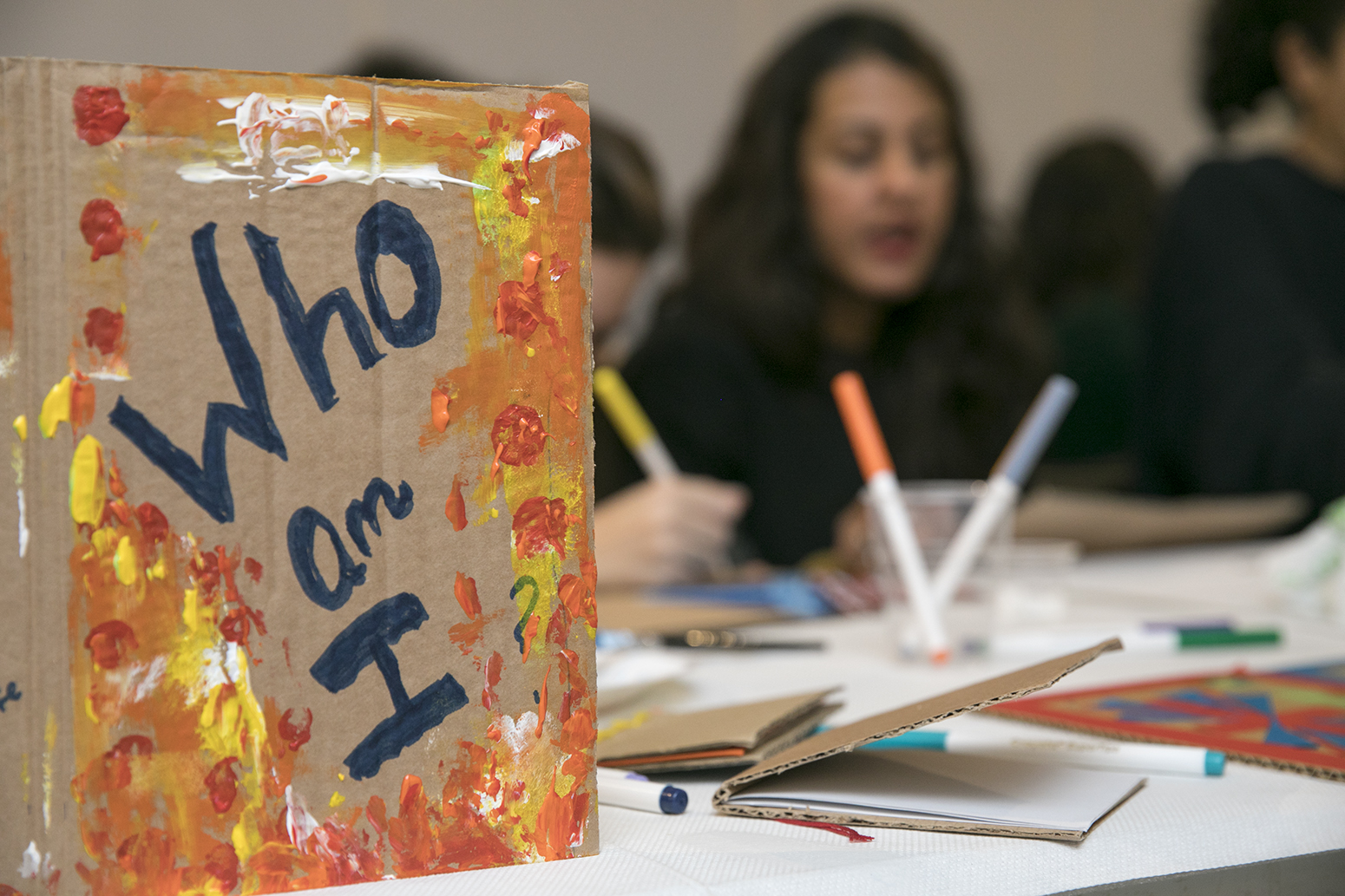
Picture by Angeles Ródenas, Migration Museum
Southwark Latin American Network (SLAN)

The Southwark Latin American network emerged organically from my action-research on community engagement and the Latin American community in Southwark. Based on previous research, I looked at existing structures within Southwark to explore whether we could implement some recommendations to support service provision for the community in the borough, and a closer and more sustainable relationship between the Latin American community and Southwark.
In July 2018, in partnership with Southwark Council and Community Southwark we started co-developing and coordinating the Latin American cross-sector network in Southwark. At its initial stage, the Latin American network brought together the local government (Southwark Council), non-profit (Latin American organisations, stakeholders and providers of services for the Latin American community in Southwark and neighbouring boroughs), public organisations (University of London, Public Health Southwark, HIV Commission Lead and Clinical Commissioning Groups).
The network was based on Community Southwark’s existing network model known as “Provider Led Group/Network” (PLG). PLGs were designed to encourage peer support between communities and organisations of different sizes and stages of development and are facilitated by Community Southwark to ensure that the groups were plugged in, joined-up and could get their messages across to opinion formers and decision makers.
The network aimed to support Latin American representation in Southwark, and to articulate a common understanding of issues, needs, goals and solutions, increasing more effective collaborative working, reducing gaps and duplication in programs, and improving services for the Latin American community at a local level. In 2021 after much deliberation, the network elected a Chair, who became a representative of Southwark Voice for the very first time. In 2022, Community Southwark allocated specific budget to develop this network and R.E.A.C.H Alliance, a network created to represent Southwark’s Black and minority ethnic communities in the decisions and policies that affect them.
During the Covid-19 outbreak, the network with the Coalition of Latin Americans in the UK, we wrote a letter to Public Health England to raise concerns about the statistical invisibility of the Latin American community and the need to include it on the government’s review on the impact of Covid-19 on the BAME communities.
In September 2021, we co-organised and co-delivered a cross-sector conference, where the Latin American community presented a set of asks to the Council.
This was considered a groundbreaking moment for the community in their fight for social justice and representation.
“I would like to be able to communicate better with my child’s school”
“I want to be able to speak to my GP without an interpreter”
Despite high levels of employment within the community, Latin Americans in London face several barriers. Proficiency in English is one of the most significant barriers to accessing key services such as education, health, and social care services (McIlwaine and Bunge, 2016; Berg, 2017; Granada, 2013). A lack of English language skills can also result in lower wages and limited educational and employment opportunities.
English language learning access to ESOL classes is one of the main needs of the Latin American community in London and in high demand. However, due to funding cuts in the last decade at a local and national level, English language learning providers are usually oversubscribed. Classes are generally scheduled at times unsuitable for those working in hospitality and cleaning services, and even if some classes are free and accessible, free childcare is not necessarily provided. This affects women who are more likely to live in households with dependent children.
Working with The Latin American Women’s Rights Service we co-created an Online English Language Course to support the organisation’s Language Café. The Language Café was initially created by LAWRS in 2017 as a Spanish and English language exchange ‘café’ with Paxton Green Time Bank (PGTB) in Southwark. The Café was supported by the Feminist Review Trust and led by women from LAWRS and PGTB who shared language skills and social opportunities, in an exchange called timebanking.
In its current format, the Language Café offers Latin American women the opportunity to learn English in an informal, safe, and community-based learning environment. In March 2020, as part of our partnership with Southwark Council, LAWRS and the Institute of Modern Languages Research joined forces to develop an online language teaching programme for and by Latin American women in London.
The course encompasses English Language learning with vital information about life in the UK, and in particular in London, from practical information about how to access health services, understand the education system, to labour rights, as well as general knowledge on culture and politics, as identified by the learning community.
Southwark Latin American Community Conference
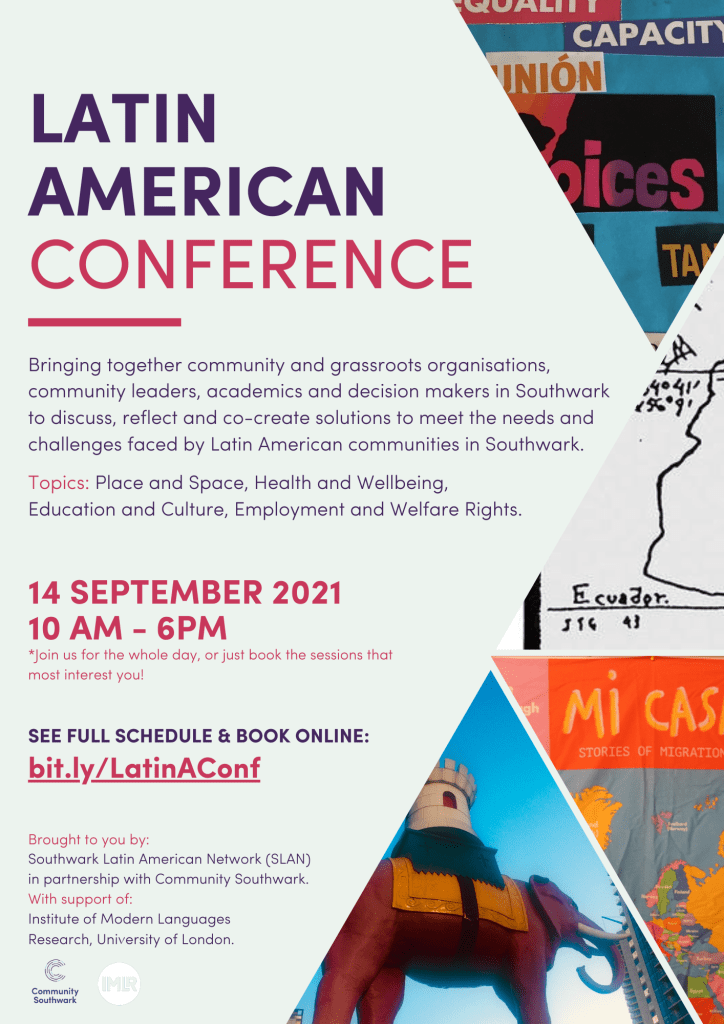
The cross-sector conference brought together Latin American organisations, community leaders, academics, and decision makers in Southwark to discuss and reflect on the needs and challenges faced by the Latin American communities in Southwark, as well as to consider the community’s assets and existing resources.
The virtual conference aimed to explore opportunities for collaboration to bring about change, offer solutions, and improve representation in Southwark.
The conference was organised by the Southwark Latin American Network (SLAN) in partnership with Community Southwark, with the support of the Institute of Modern Languages Research, University of London.
The conference was a collaborative and collective effort that aimed to:
- Present research on community engagement in Southwark with the Latin American community
- Introduce the Southwark Latin American Network (SLAN)
- Discuss forms of collaboration across sectors
- Present a set of asks – by the community organisations
The conference was introduced by Community Southwark CEO, Chris Mikata-Pralat, and Cllr Alice MacDonald (Cabinet Member for Equalities, Neighbourhoods and Leisure), and Cllr Maria Linforth-Hall spoke about the importance of engaging with the Latin American community in Southwark.
Please see report on “Research”.
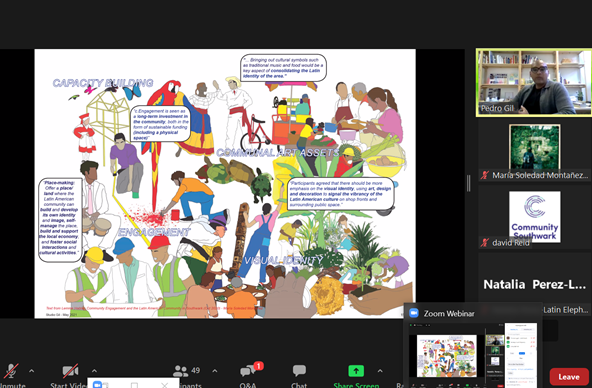
Screenshot of his presentation, which includes quotes from my research.
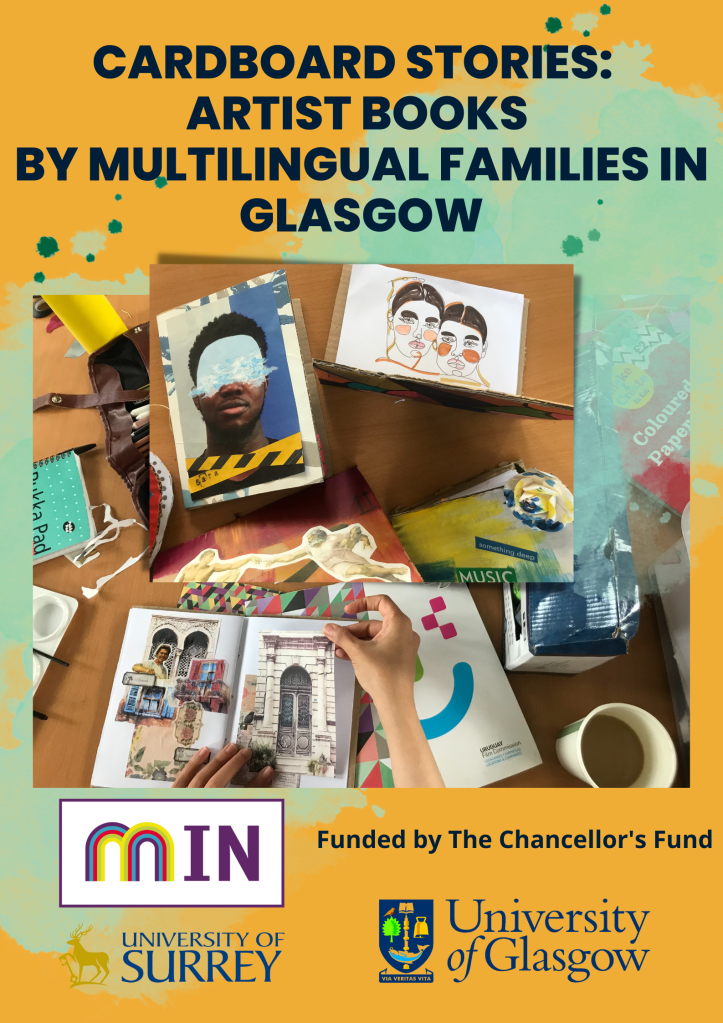
Cardboard Stories: Artist Books by Multilingual Families in Glasgow


Engagement-led Undergraduate Scholarship: Bringing Multilingual Students and Communities Together
I am currently developing an UG community-engaged learning course in Spanish, which aims to promote active learning strategies within Modern Languages. The course explores community engagement, migration, and diaspora in the UK more broadly, and the Spanish and Latin American communities more specifically, considering different engagement methodologies and approaches in multilingual contexts. The course aims to integrate community-engaged experiences and projects with academic course content, while providing benefit to Scotland’s local communities.
- Approach to Student-Centred Active Learning: this is a student and project-centred course, which seeks to work as a model within Hispanic Studies to explore new methods and approaches to language teaching and learning. Students will explore the role and place of community languages within migration and diaspora studies by analysing language policies, educational policies, and studying concepts such as multilingualism and language heritage in the UK, before deciding on their project and reflect on its possible outcomes and challenges, as well as social and ethical implications.
- Transforming curricula and assessment: As part of the assessment, students will identify the communities’ linguistic needs and barriers and produce materials and resources in Spanish for the Spanish-speaking communities in Scotland. This is currently a unique active learning approach within the School of Modern Languages and Cultures at the University of Glasgow, as students will create tangible and much-needed multilingual resources for the communities. Students will also write a reflective piece about developing their community project, by linking their work to theory and context, including the challenges they faced and the solutions they found.
- Students’ Professional & Skills Development: the course includes the exploration of several engagement activities, from arts-based projects to translation exercises, as well as individual reflection and teamwork. Students will work in teams to decide, design and execute a project (as detailed below). The different activities will foster leadership skills, problem solving, organisational skills, and communication skills, including digital skills (such as co-drafting tools, crowd mapping, or visual collaboration platforms). By the end of the course, students will have a better understanding of migration and language policies in the UK, and the many intersectional barriers faced by different migrant communities, while focusing on tangible solutions (e.g. a quick guide about the education system in Scotland in Spanish).
At a later stage, we aim to build partnerships with local community organisations where students will develop further interactions and work-related activities (as from 2023).
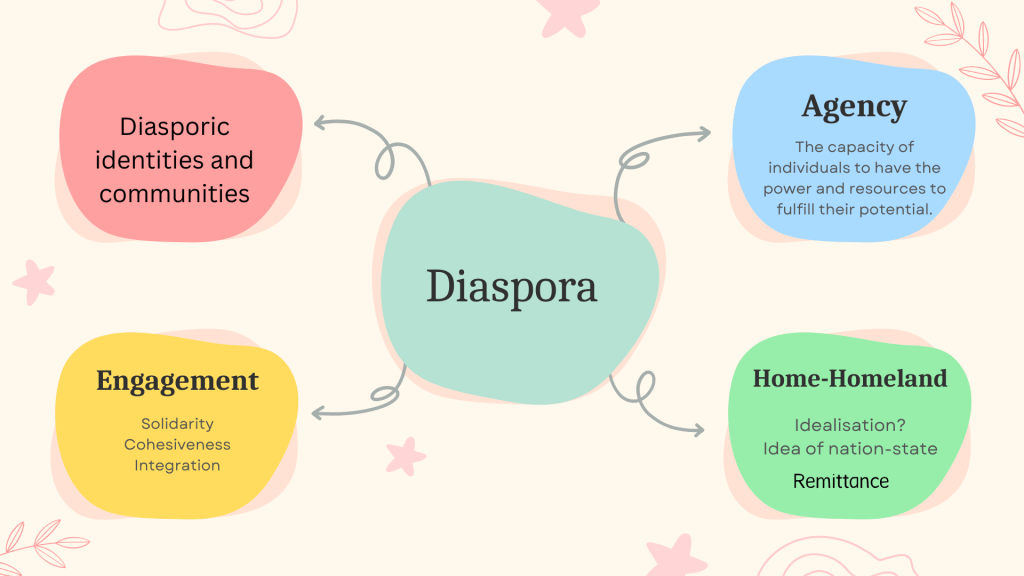
Stitching Memory: Refugee histories and solidarity
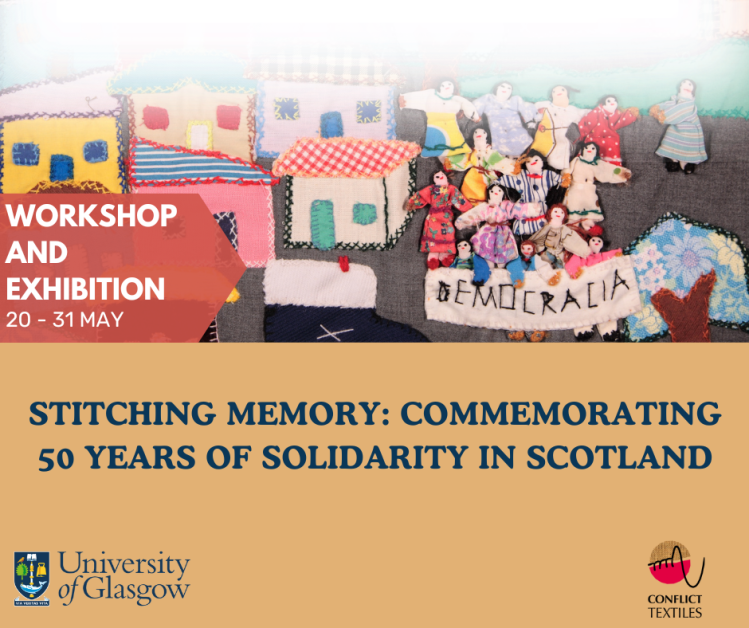
Stitching Memory: Commemorating 50 years of solidarity in Scotland
The multidisciplinary project aimed to commemorate the 50th anniversary of the Coup d’etat in Chile and Uruguay by exploring the impact and role the UK played. This project offered a multidisciplinary and transnational approach to explore and share knowledge related to cultural and historical memory, migration, community engagement, and refugee heritage in Scotland.
Participants gained an understanding of the positive effects that solidarity networks have had on welcoming refugees in Scotland since the 1970s. The workshop and exhibition provided a deeper understanding of collective and cultural memory, refugee histories, and heritage in Scotland. Participants engaged with the historical narratives of the Latin American diaspora and reflected on the broader implications of migration and exile. The exhibition attracted a large number of visitors, who were deeply moved by the creativity and stories embedded in the textile pieces. Whereas participants at the workshop acquired practical skills in arpillera-making. Many expressed a desire to continue practicing this craft, highlighting the workshop’s success in fostering a better understanding of this form of artivism. The workshop provided a platform for participants to creatively express their personal and collective narratives regarding solidarity, displacement and migration through arpilleras. The event facilitated connections between local residents, members of the Latin American community, activists, academics and students, fostering a sense of solidarity and mutual support. These connections are expected to lead to future collaborations and community projects.
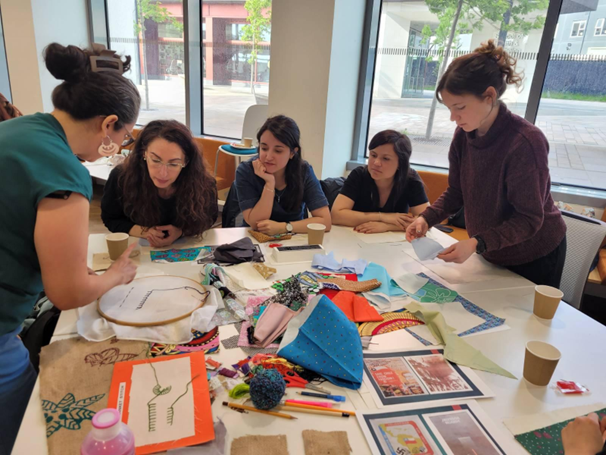
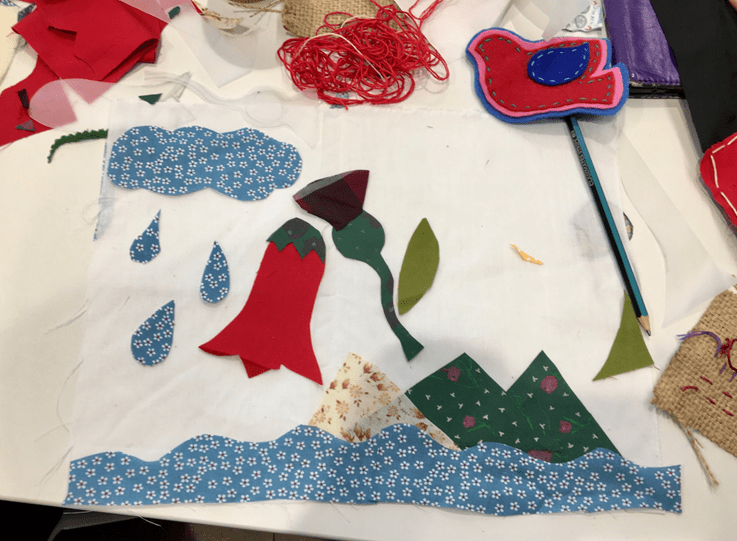
The project was co-organized by Gabriela Cruz from the School of Psychology and Neuroscience and Soledad Montañez from the School of Modern Languages and Research, University of Glasgow in May 2024, in partnership with art curator and founder of Conflict Textiles, Roberta Bacic and art facilitator Jimena Pardo, in collaboration with the Glasgow Latin American Research Network. The projected was funded by the Glasgow Knowledge Exchange Fund.
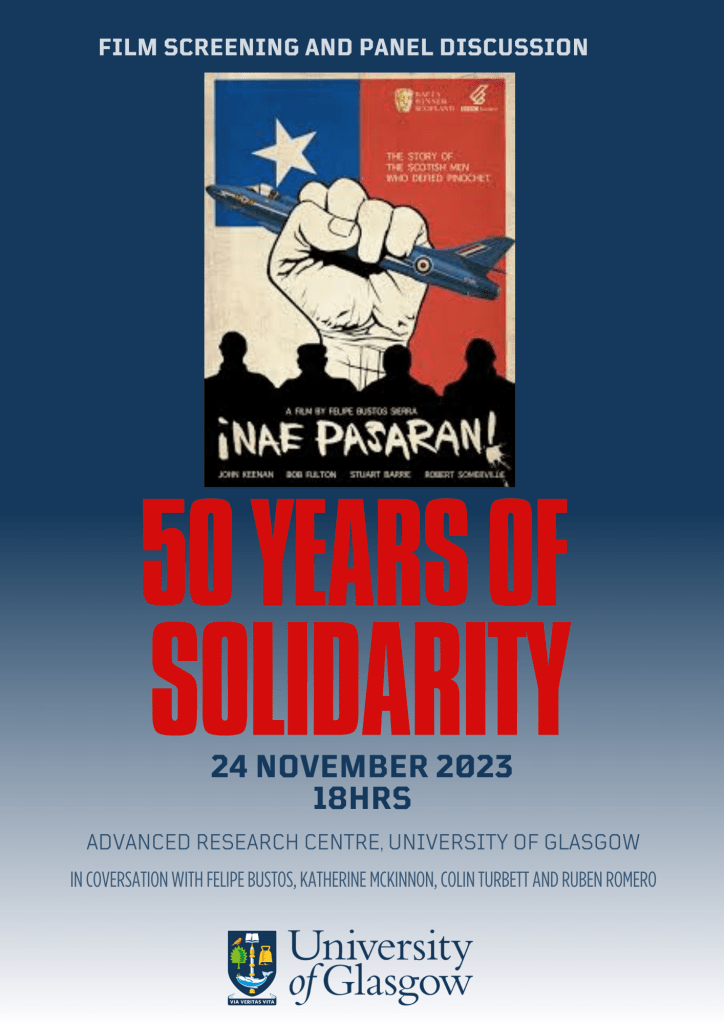
COMMEMORATING 50 YEARS OF SOLIDARITY IN SCOTLAND
School of Modern Languages and Cultures; School of Psychology and Neuroscience, 24 November 2023, University of Glasgow
The coup d’états of Chile and Uruguay in 1973 led to an international outcry when the democratically elected governments were brutally overthrown by a military junta.
Over 200 thousand people were exiled, and many found refuge in the UK. Individuals and organisations, such as the Chile Solidarity Campaign, the Chile Committee for Human Rights, the World University Service (WUS) through their Chile programme were established to raise awareness in the UK about the brutal events in the Southern Cone.
Scotland played a vital role in the campaigns helping to establish social networks and organisations. However, the memories and stories of those involved in solidarity campaigns remain largely unexplored and undocumented, especially in Scotland. Collective memory has been a topic of great interest for researchers in the arts, humanities, and social sciences, but it is only recently that researchers in psychology and neuroscience started to develop empirical methodology to approach this topic.
As part of our project on collective memory, migration and the Latin American communities in Scotland, Gabriela Cruz and I co-organised in November 2023 the film screening of the Scottish film Nae Pasaran, followed by a panel discussion with film director, Felipe Bustos, Katherine Mackinnon, researcher on refugee histories in Scotland, Colin Turbett, writer and member of the Chile solidarity campaign, Rubén Romero, Chilean activist, and Maria Wimber, neuroscientist specialist in memory, reconstruction, forgetting and the brain.
The panel was moderated by Prof. David Featherstone and co-Organised with Dr Gabriela Cruz.
Community Projects
In 2025 I was granted funding from the University of Glasgow to test the idea of co-developing a Latin American Cultural Arts Centre in Glasgow. We delivered 3 workshops to collectively imagine and design the Centre.
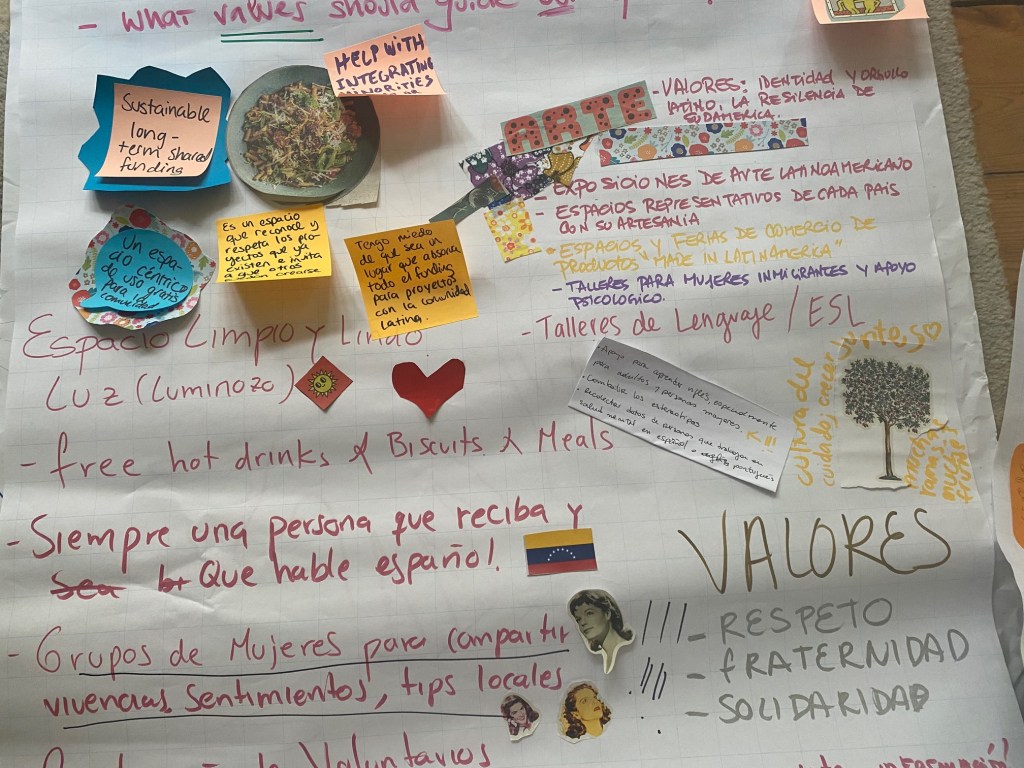
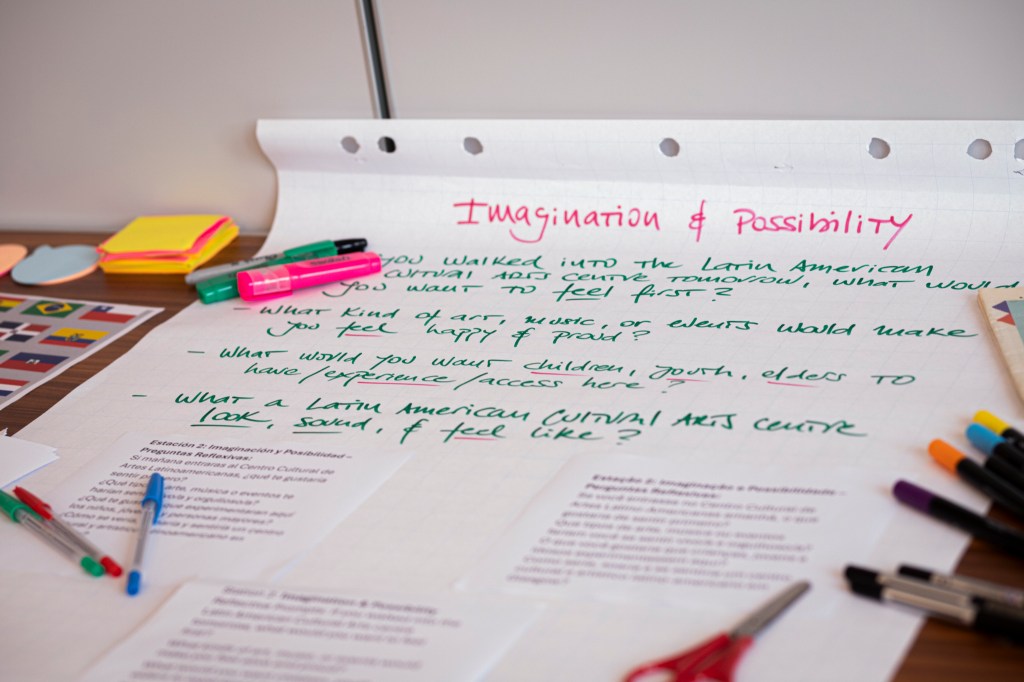
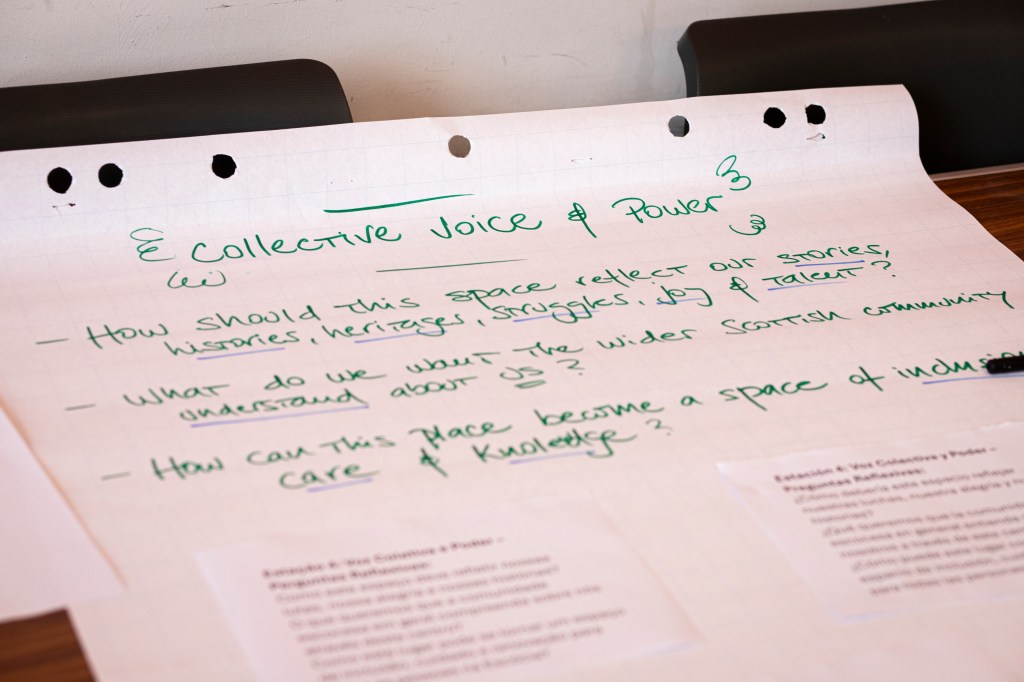
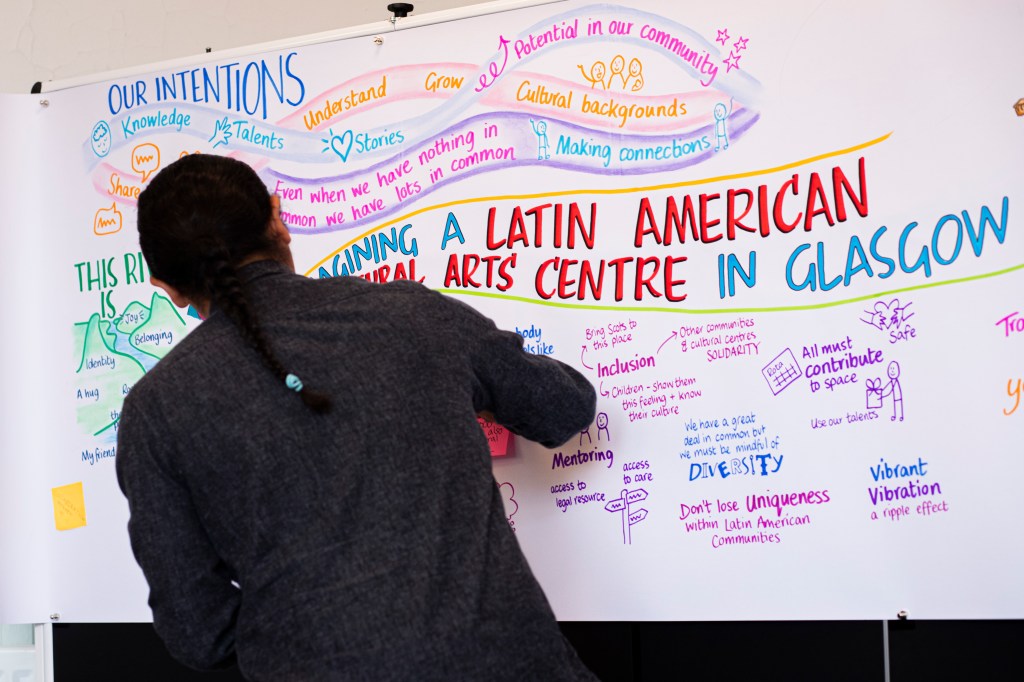
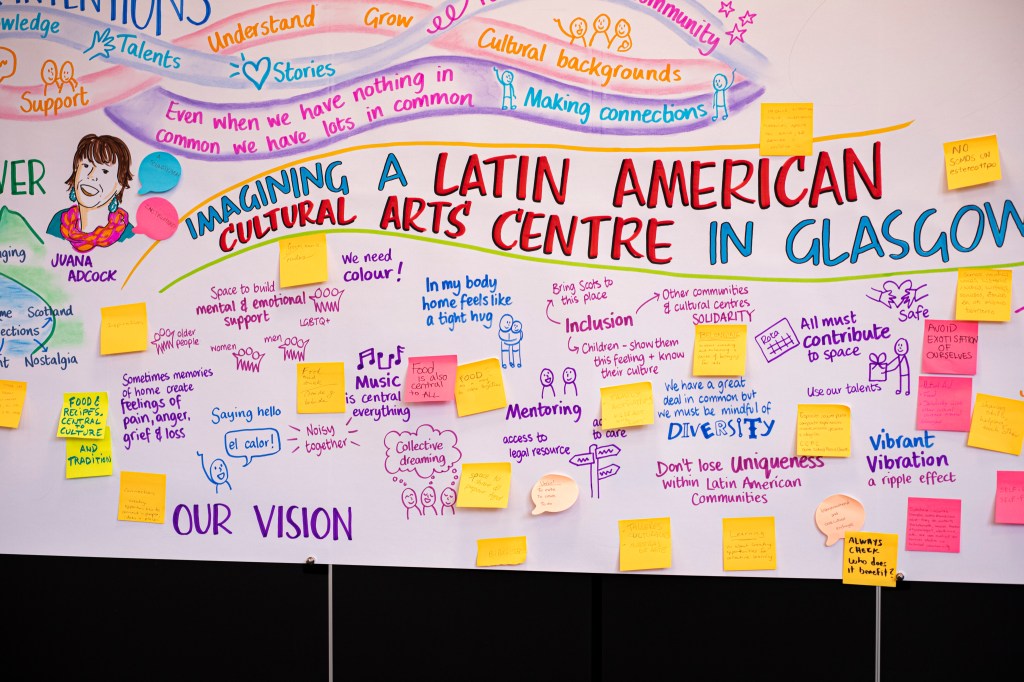
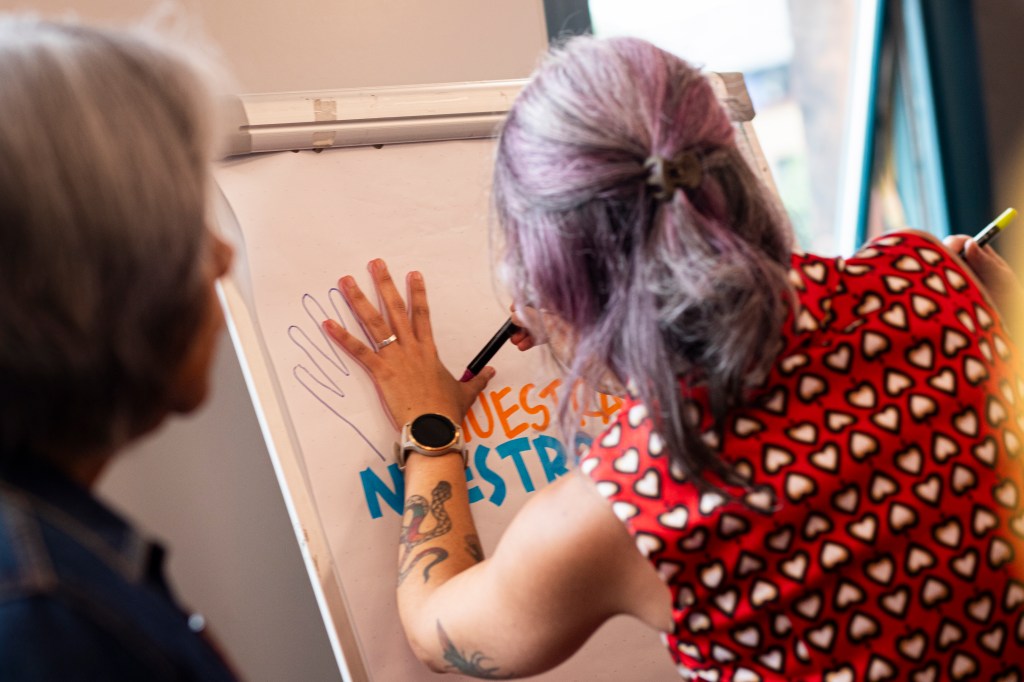
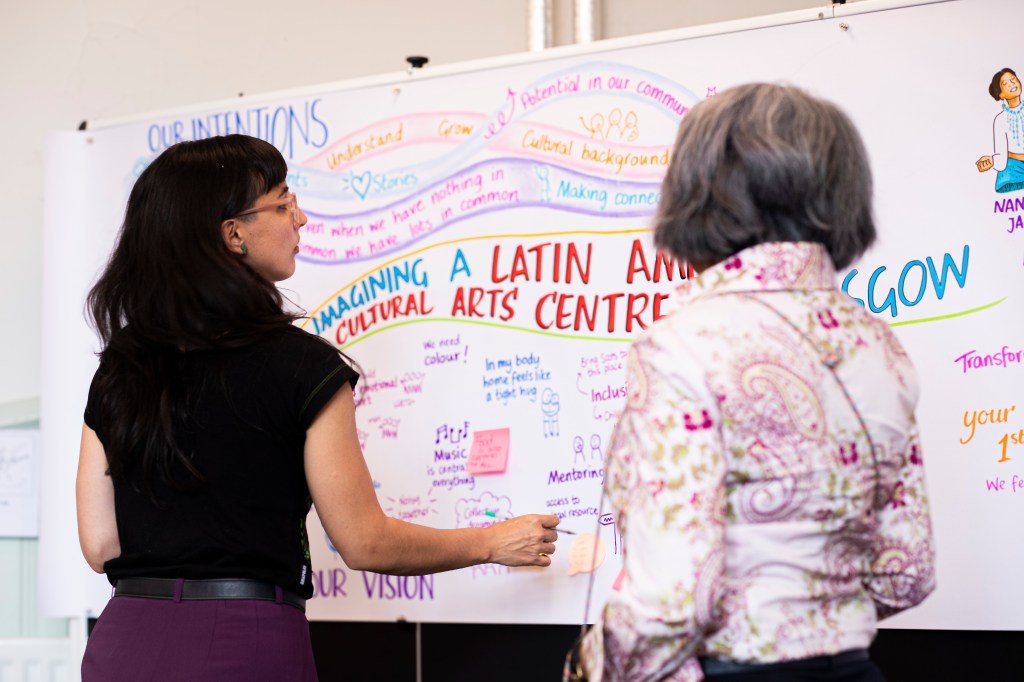
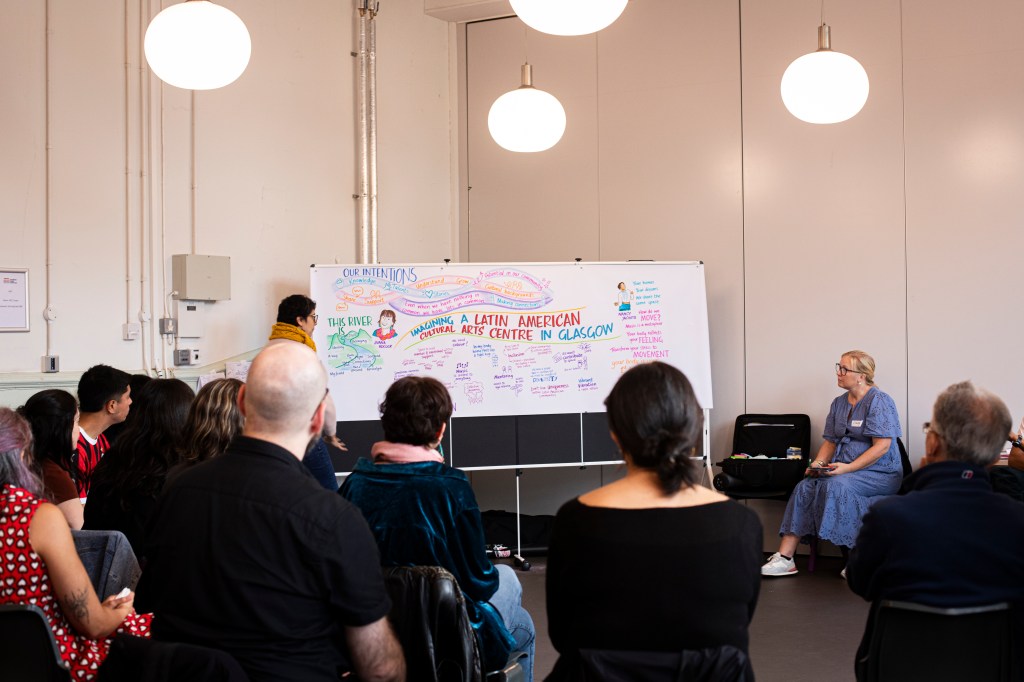
Do you want to learn more about this project? Read my report on the “Research” section.
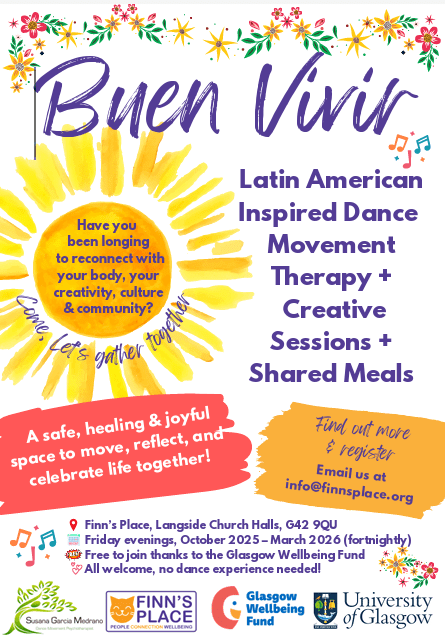
Buen vivir: Latin American inspired Dance Movement Therapy (DMT) and creative sessions
 Dr María Soledad Montañez