Latin American Diaspora in the UK
Devolved Invisibility: Identity and Belonging Among Latin American Communities in Scotland, Bulletin of Latin American Studies, 2026 (article, special edition).
Abstract: In a nation known for welcoming migrants and its history of transnational solidarity but marked by colonial amnesia, this article addresses the research gap on Latin American communities in Scotland. It focuses on first-generation migrants who settled in Scotland in the 21st century, examining how they negotiate identity and belonging against the backdrop of political devolution. Using the metaphor of the Walking Palm tree to analyse Latin American identities in the UK, and as a lens for rethinking migration in a devolved nation, this article seeks to deepen understanding of Latin American migration, cultural histories, and heritages in Scotland.
Community engagement and the Latin American Community in Southwark – Research Report
Executive Summary
Engaging with the Latin American Community in Southwark – Follow-up research report
School of Advanced Study, Annual Report 2018
Case Study, School of Advanced Study, University of London
At the crossroads: engaging with South London’s Latin American community
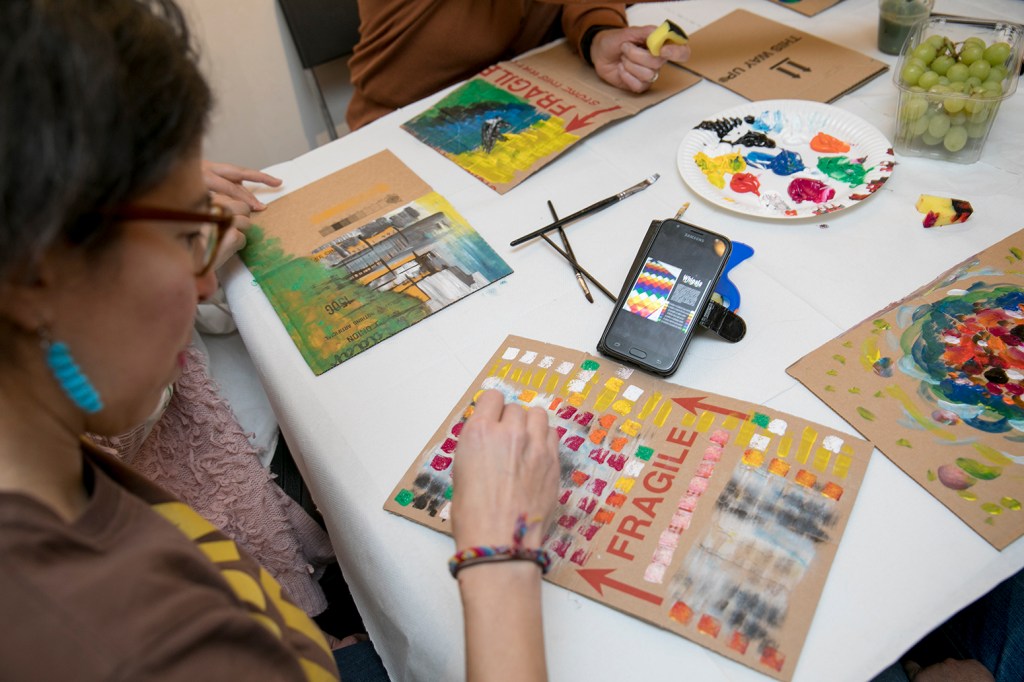
- A Latin American Cultural Arts Centre in Glasgow?In 2025, I was awarded the Creative Launch Fund to explore the creation of a Latin American Cultural Arts Centre in Glasgow. The project builds on my research into Latin American diasporas in London and Scotland. The funding supported the delivery of three community workshops designed to collectively imagine and co-design the proposed Centre. TheContinue reading “A Latin American Cultural Arts Centre in Glasgow?”
- Welcome to This Trip: Young Latin Americans Rewrite Migration NarrativesIn recent years, migration has become one of the central battlegrounds of political debate across Europe and the United Kingdom. The rise of far-right movements, fuelled by nationalist rhetoric and anti-immigrant sentiment, has reshaped public discourse on belonging, identity, and citizenship. Migrants are too often cast as threats — whether to economic stability, social cohesion,Continue reading “Welcome to This Trip: Young Latin Americans Rewrite Migration Narratives”
- Open for Discussion- Languages and the Pandemic: Public Health Engagement with Multilingual Communities in the UKIn 2021, I was invited to take part of the Open for Discussion, an annual series of conversations convened by experts at the School of Advanced Study at the University of London that brings multidisciplinary humanities perspectives to bear on critical social issues — issues with human dimensions frequently overlooked in current policy debates. TheContinue reading “Open for Discussion- Languages and the Pandemic: Public Health Engagement with Multilingual Communities in the UK”
Ongoing Research: Latin Americans in Scotland
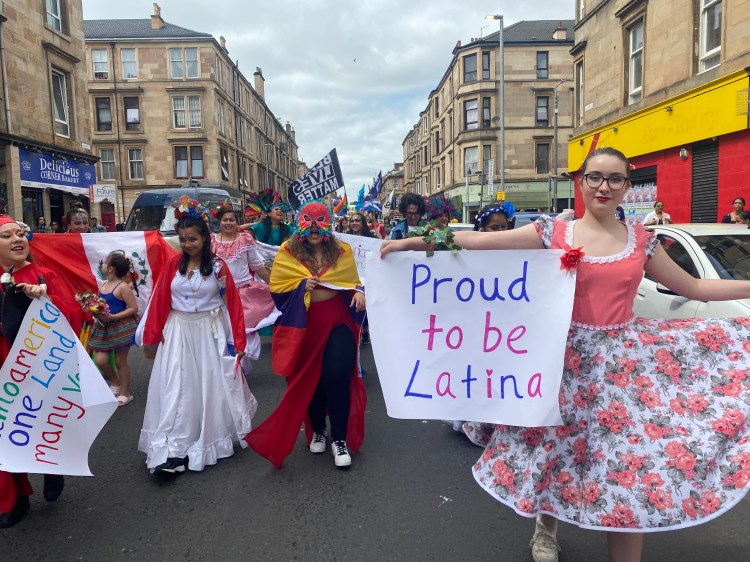
Latin American communities in Scotland are under-represented, under-researched and remain invisible, despite a rich history of migration that spans almost five decades. This project aims to map the Latin American communities, recording the stories and tracing the histories of Latin Americans in Scotland, with a focus in Greater Glasgow.

 Dr María Soledad Montañez